What is a bill of lading? Types, fields, and why it matters for customs
Bruce·16 June 2026·7 min read
A bill of lading (B/L) is a legal document issued by a carrier to a shipper that serves three purposes: it's a receipt confirming the carrier has received the goods, a contract of carriage setting the terms of transport, and a document of title that can transfer ownership of the goods. In Australian customs, the B/L number is the primary reference linking a shipment to its import declaration, making it one of the most important documents in international trade.
The three functions of a bill of lading
The receipt function is the most straightforward. When a shipping line issues a B/L, they're confirming they received the goods described in the document. If you shipped 400 cartons of ceramic tiles in container MSCU1234567, the B/L is the carrier's acknowledgment that those 400 cartons were loaded onto their vessel. If the goods arrive damaged or short, the B/L is your evidence of what was handed over.
The contract function defines how the goods will be carried. The B/L specifies the vessel, the port of loading, the port of discharge, and whether freight is prepaid or collect. It doesn't contain every detail of the carriage agreement (the shipping line's standard terms and conditions are incorporated by reference), but it captures the specifics of this particular shipment. If the carrier delivers to the wrong port, the B/L is your proof of what was agreed.
The title function is what makes a B/L unique among shipping documents. A negotiable B/L represents ownership of the goods. Whoever holds the original B/L can claim the goods at the destination port. This is why banks accept B/Ls as security for letters of credit, and why originals are still couriered around the world in 2026. If you endorse a negotiable B/L to a third party, you're transferring ownership of the cargo without touching it.
Types of bill of lading
Not all B/Ls work the same way. The type determines who issues it, whether it can transfer ownership, and how cargo is released at the destination.
| Type | Issued by | Negotiable | Use case |
|---|---|---|---|
| Master B/L (MBL) | Shipping line | Varies | Carrier's contract with the freight forwarder |
| House B/L (HBL) | Freight forwarder | Varies | Forwarder's contract with the shipper |
| Straight B/L | Carrier or forwarder | No | Named consignee, no transfer |
| Order B/L | Carrier or forwarder | Yes | Transferable, used with letters of credit |
| Sea waybill | Carrier or forwarder | No | Fast release, no originals needed |
| Through B/L | Carrier | Varies | Covers multiple transport modes |
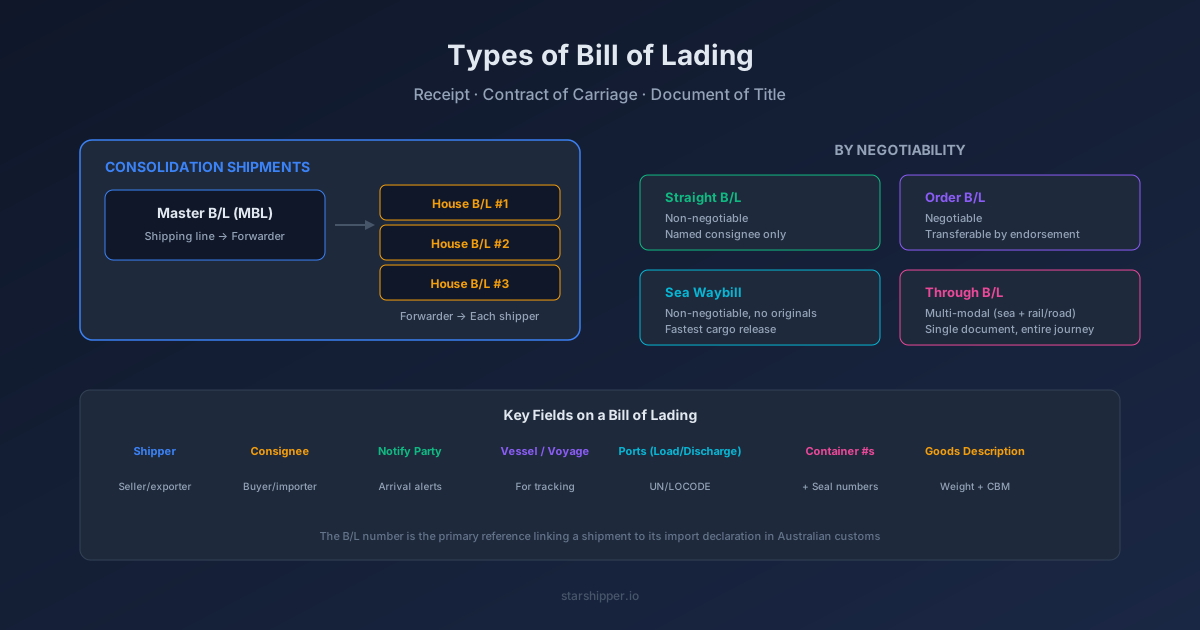
The Master B/L and House B/L distinction matters most for consolidated shipments. When a freight forwarder books a full container with a shipping line, they receive a Master B/L. The forwarder then issues their own House B/Ls to each shipper whose goods are in that container. The shipping line only knows about the forwarder. The individual shippers only see their House B/L. At the destination, the forwarder's agent uses the MBL to collect the container, then releases individual consignments against the HBLs.
For Australian customs declarations, the House B/L number is typically the primary reference on the import entry because it identifies the specific consignment within a consolidated container. The Master B/L identifies the physical container movement.
Key fields on a bill of lading
A B/L carries a lot of information, but certain fields matter more than others when it comes to customs clearance and compliance.
Shipper and consignee identify who sent the goods and who receives them. The consignee on the B/L must match the importer on the customs declaration. When these don't match, you get queries from ABF. The notify party is the contact at the destination who gets notified when goods arrive, often the customs broker or the consignee's warehouse.
Vessel and voyage identify the ship and its specific sailing. These are critical for tracking and for matching the B/L to arrival notices and port records. A vessel name like "MSC ANNA" combined with voyage "FA607R" uniquely identifies one sailing on one route. You can look up any port of loading or discharge using the UN/LOCODE printed on the B/L.
Container and seal numbers link the B/L to the physical boxes on the ship. Container numbers follow the ISO 6346 format: four letters (owner code plus category) followed by seven digits including a check digit. Seal numbers verify the container hasn't been opened since the shipper loaded it. If the seal at destination doesn't match the seal on the B/L, that's a problem.
Goods description, weight, and measurement describe what's in the containers. The description doesn't need to be as detailed as the commercial invoice, but it should be consistent. Gross weight in kilograms and cubic measurement (CBM) are standard. These figures should match across the B/L, packing list, and commercial invoice. When they don't, it's one of the most common cross-check failures we see.
Freight terms indicate whether freight is prepaid (shipper pays at origin) or collect (consignee pays at destination). This matters for customs valuation. On a CIF shipment, the customs value includes freight and insurance. On FOB, you add them separately. The B/L tells you which applies.
On-board date is when the goods were actually loaded onto the vessel. This date determines the exchange rate for customs valuation purposes and starts the clock on any letter of credit presentation period.
Bill of lading vs sea waybill
The practical difference comes down to one question: do you need to transfer ownership of the goods while they're on the water?
If you're trading under a letter of credit, the bank needs a negotiable B/L as security. The bank holds the originals and only releases them when payment conditions are met. The consignee can't collect the goods without the original B/L, which gives the bank its security. In this scenario, a sea waybill won't work because it doesn't represent title.
If you're trading on open account with an established supplier, a sea waybill is faster and simpler. There are no originals to courier. The named consignee just identifies themselves at the destination port and collects the goods. No paper chase, no delays waiting for documents to arrive by express post from Shanghai.
The industry is gradually moving toward electronic B/Ls through platforms like DCSA and Bolero, which preserve the title function in digital form. Adoption is still patchy. Most Australian customs brokers still work with PDF or scanned B/Ls daily, and original paper B/Ls remain common for LC transactions.
Common B/L problems in customs clearance
After processing thousands of B/Ls, certain problems come up repeatedly.
Mismatched consignee names are the most frequent. The B/L says "Smith Trading Pty Ltd" and the customs entry has "Smith Trading Pty Limited" or "Smith Trading." These look like the same entity to a human but can trigger queries in automated systems. Getting the legal entity name exactly right matters.
Wrong or outdated port codes cause delays. A B/L showing CNSHA (Shanghai) when the goods actually loaded at CNYPG (Yangshan, the deep-water port that serves Shanghai) creates a mismatch with the vessel's actual route data. Both ports serve the same city, but the codes are different.
Missing container numbers on B/Ls are rarer but happen with LCL (less than container load) shipments where the forwarder issues the HBL before the container is packed. The container number gets added later, sometimes only on the arrival notice, which means other documents in the shipment reference a container the B/L doesn't mention.
"Said to contain" (STC) clauses mean the carrier hasn't verified the contents. They're accepting the shipper's description on trust. This is normal for FCL shipments (the shipping line doesn't open sealed containers to count cartons), but it means the B/L goods description is only as accurate as what the shipper declared.
Claused B/Ls note damage or discrepancies at the time of loading, things like "3 cartons torn" or "goods wet before shipment." A clean B/L has no such notations. Banks will reject claused B/Ls under a letter of credit because they indicate the goods weren't in good order when shipped.
How StarShipper handles B/L extraction
StarShipper automatically extracts all key fields from uploaded bills of lading, whether they're PDFs, scanned images, or XML files from carrier portals. The extracted data populates the shipment record: vessel and voyage, container and seal numbers, parties, port codes, weights, and freight terms. Every field is cross-checked against other documents on the same shipment to catch inconsistencies before they reach your customs declaration.
You can read more about how this works on the bill of lading solutions page.
See it work on your documents
Forward a commercial invoice or bill of lading to your StarShipper inbox — every field extracted and validated in seconds.